
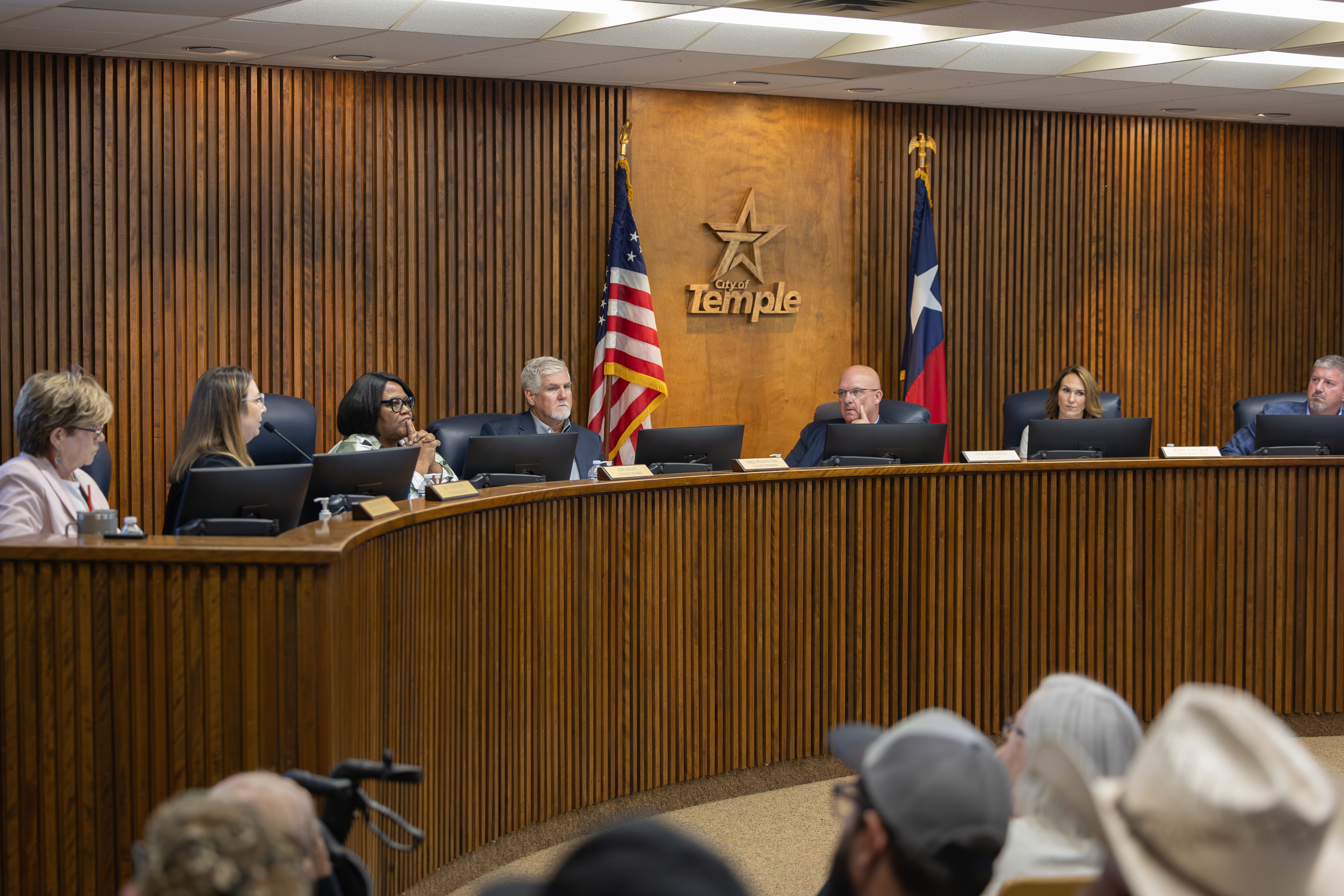
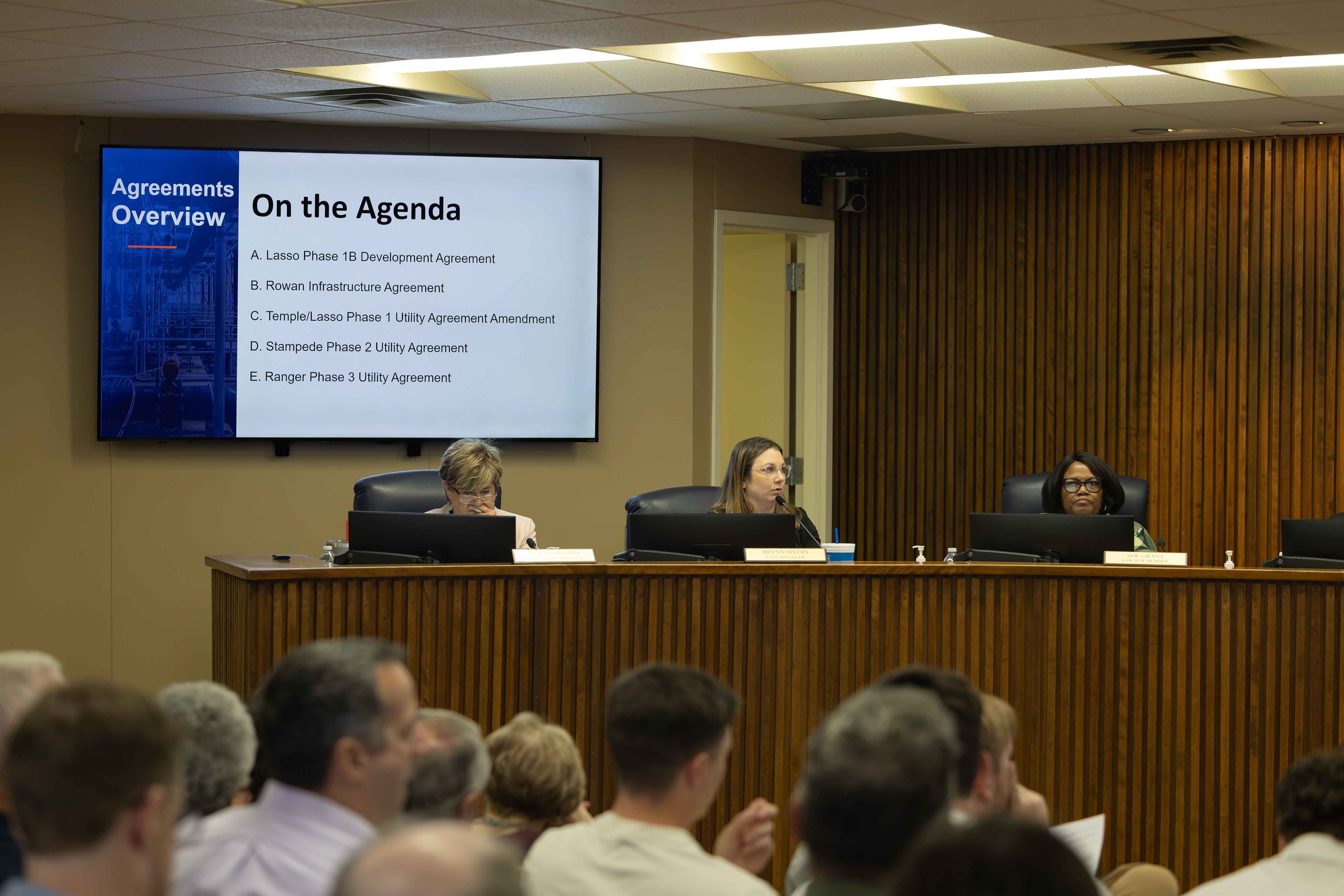
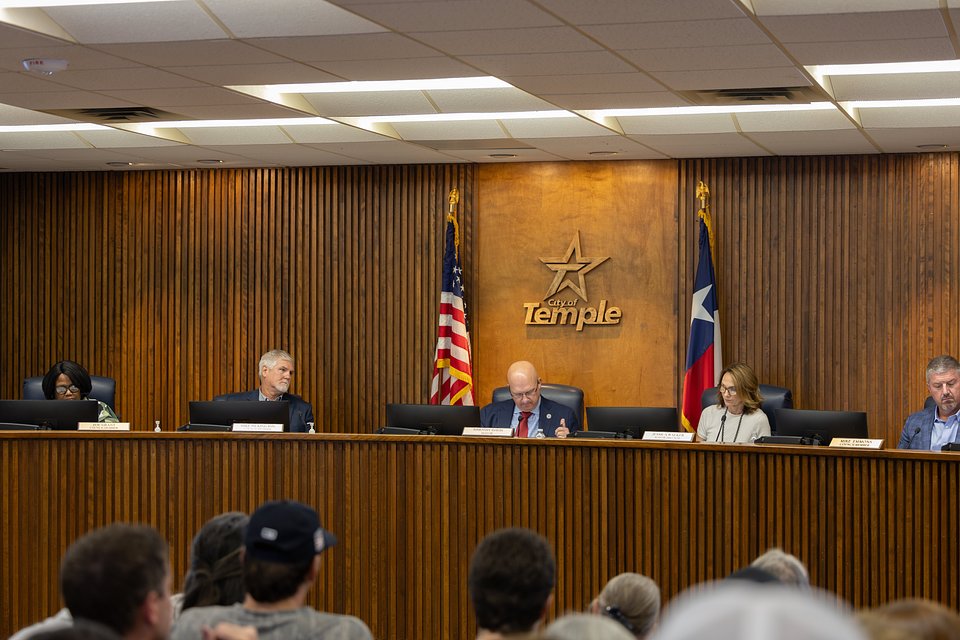
At its September 17 meeting, the Temple City Council approved several items related to current and future data center development in Temple.
These actions address different aspects of the projects, including development requirements, infrastructure responsibilities, and restrictions on the use of the City’s water and wastewater systems.
Items approved include:
Data Center Development Requirements: Amendments to the City’s Unified Development Code (UDC) regarding minimum development standards for new data centers, including requirements for the use of closed-loop cooling systems, buffering, traffic impact studies, light and sound mitigation, site orientation requirements, and conditional use permits for standalone data centers.
These amendments to the UDC standardize the project-specific requirements that data centers currently under development have been subject to through planned development ordinances, applying to future data center projects and requiringe these future projects to obtain a Conditional Use Permit (CUP). All data centers remain subject to the City's zoning, engineering, utility, fire, building, and public review processes. Whether the data centers currently under development are subject to a planned development zoning ordinance, or prospective new data center proposals required to obtain a CUP, the project is subject to enforceable development conditions and requirements such as noise, lighting, landscaping, buffering, traffic, and site design.
The adopted amendments apply to future data center projects and require these projects to obtain a Conditional Use Permit (CUP) to develop in light industrial and heavy industrial zoning districts.
Rowan Phase 1B – Project Lasso Annexation and Zoning: Voluntary annexation and Planned Development–Light Industrial (PD-LI) zoning for property associated with Phase 1B. Annexation brings the property into the city limits, allowing the City to apply its zoning and land use requirements and subject the development of the property to the City’s codes, including building and fire codes, and its permitting and inspection processes. The Planned Development zoning includes project-specific development conditions for the property that mirror the development conditions approved for Phase 1A.
Project Lasso Development Agreement: A Development Agreement for Phase 1B, covering the property acquired by Rowan as replacement for the City’s future Landfill Expansion. The agreement addresses Comprehensive Plan coordination, thoroughfare alignment, phased permitting requirements, noise mitigation, utility coordination, and relocation of infrastructure at Rowan’s expense.
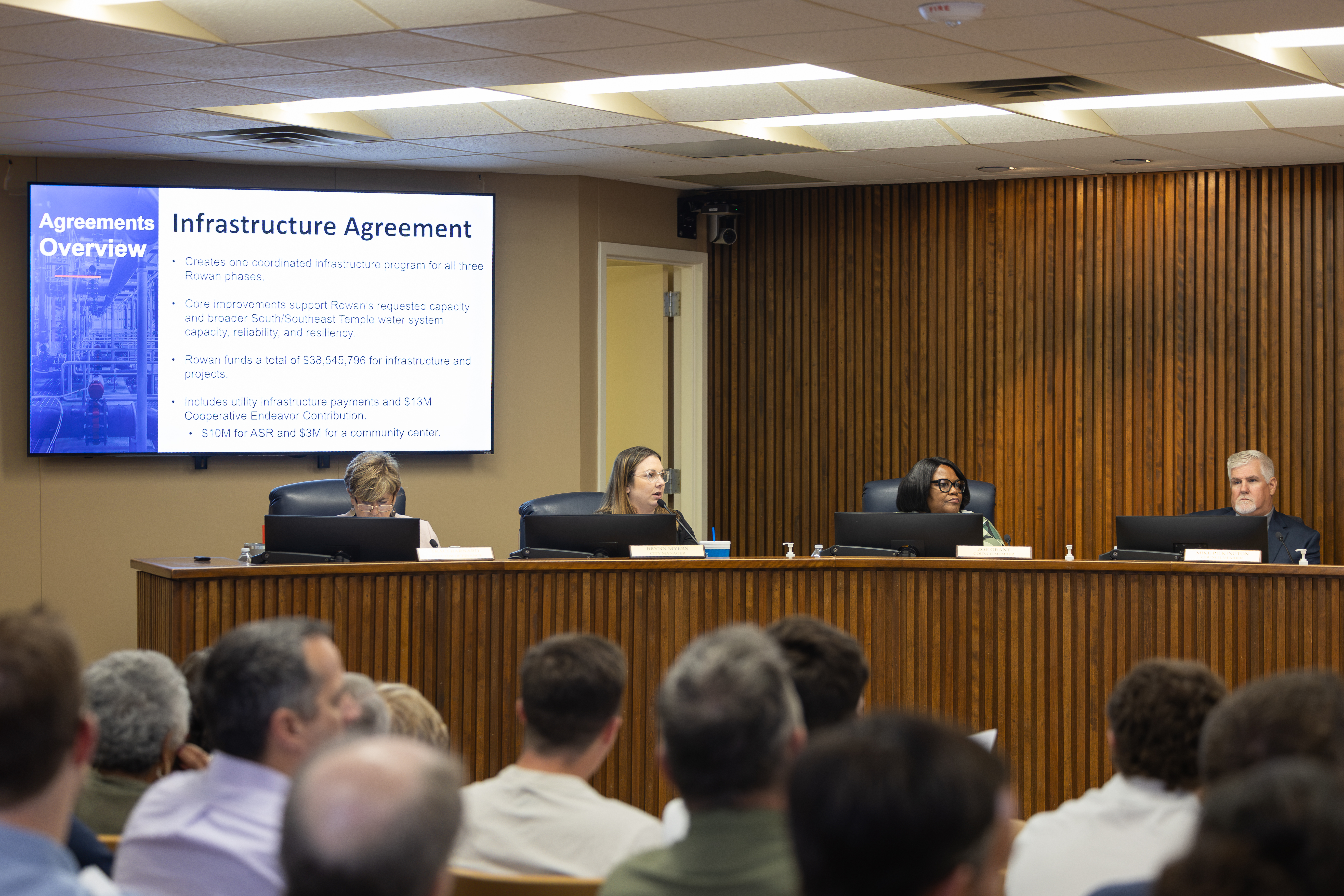
Infrastructure Agreement: An agreement encompassing the three phases of Rowan’s development, establishing Rowan’s responsibilities for funding, design, construction, dedication, and timing or utility infrastructure improvements. Under this Agreement, Rowan will fund a total of $38,545,796 for infrastructure projects which includes an approximate $25 million contribution towards the South Temple Water Infrastructure Capital Program, consisting of 10 projects to bring significant additional water capacity to the South and Southeast portions of our community as well as a voluntary $13 million Cooperative Endeavor Contribution consisting of $10 million toward an Aquifer Storage and Recovery (ASR) Project and $3 million toward a Community Center.
Code of Ordinance Updates: Council approved amendments to Chapter 38 of the City’s Code of Ordinances, requiring Utility Service Agreements for certain industrially zoned developments or Special Utility Projects. A resolution was also passed defining Special Utility Projects.
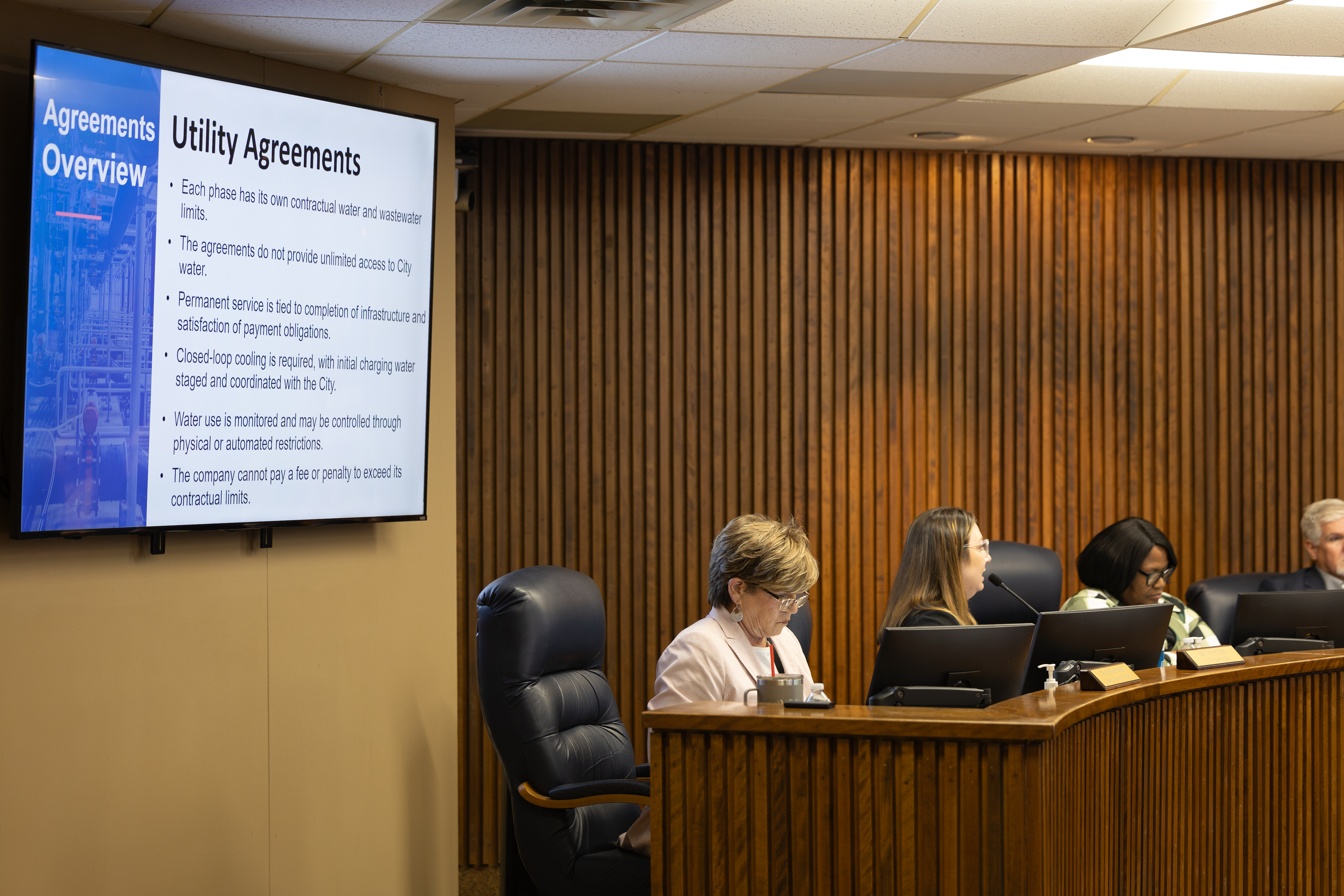
Utility Service Agreements: An agreement for each of the three Rowan project sites establishing requirements for the use of the City’s water and wastewater systems, including water and wastewater capacity use limits, monitoring and metering, infrastructure requirements, timing and staging of water use, and compliance and enforcement mechanisms. Closed loop cooling is required, and initial charging waster must be staged and coordinated with the City.
Once operational, estimated average daily water for the project is:
• Phase 1(Temple/Kayak/Lasso): 13,800 gallons per day
• Phase 2 (Stampede): 8,200 gallons per day
• Phase 3 (Ranger): 10,100 gallons per day
At full buildout, all three phases are cumulatively expected to use less than 1% of the total water used each day by City of Temple water customers. Each data center building is expected to use less water per day than a typical sit-down restaurant, which can use 7,000 gallons or more per day.
The Utility Service Agreements include water use limits which the City will monitor through advanced meters. If established limits are exceeded, the agreements provide enforcement mechanisms, including the ability to require installation of physical or automated limiting devices to restrict water use. The agreement does not allow the limit to be exceeded by paying a fee or fine.
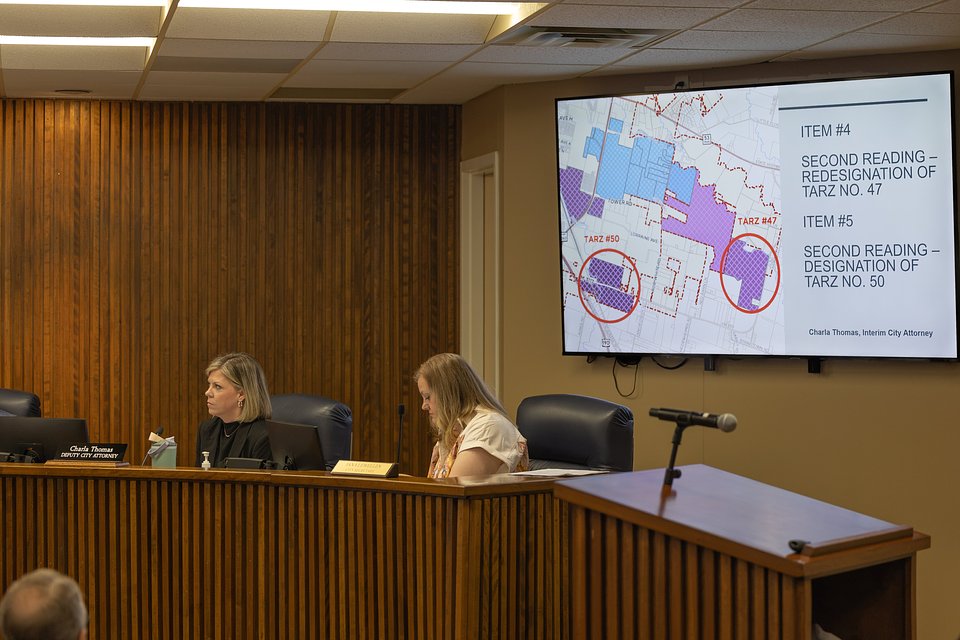
Tax Abatement-Related Actions: Council approved Tax Abatement Reinvestment Zone designations associated with the two portions of the project. A Tax Abatement Reinvestment Zone identifies an area that may be eligible for tax abatement. Council also approved an amendment to Rowan’s existing Tax Abatement Agreement that strengthens requirements of the existing agreement by preventing a company with its own abatement from also receiving benefits from Rowan’s agreement, excluding temporary onsite electrical generation from satisfying required investment provisions, and providing that tax abatement benefits will be discontinued for any period temporary generation is used beyond the allowable period. The amendment does NOT: reduce the company’s investment commitment; extend the abatement period; or grant new incentives.
You can learn more and find additional information about data center development in Temple at templetx.gov/datacenters.
These actions address different aspects of the projects, including development requirements, infrastructure responsibilities, and restrictions on the use of the City’s water and wastewater systems.
Items approved include:
Data Center Development Requirements: Amendments to the City’s Unified Development Code (UDC) regarding minimum development standards for new data centers, including requirements for the use of closed-loop cooling systems, buffering, traffic impact studies, light and sound mitigation, site orientation requirements, and conditional use permits for standalone data centers.
These amendments to the UDC standardize the project-specific requirements that data centers currently under development have been subject to through planned development ordinances, applying to future data center projects and requiringe these future projects to obtain a Conditional Use Permit (CUP). All data centers remain subject to the City's zoning, engineering, utility, fire, building, and public review processes. Whether the data centers currently under development are subject to a planned development zoning ordinance, or prospective new data center proposals required to obtain a CUP, the project is subject to enforceable development conditions and requirements such as noise, lighting, landscaping, buffering, traffic, and site design.
The adopted amendments apply to future data center projects and require these projects to obtain a Conditional Use Permit (CUP) to develop in light industrial and heavy industrial zoning districts.
Rowan Phase 1B – Project Lasso Annexation and Zoning: Voluntary annexation and Planned Development–Light Industrial (PD-LI) zoning for property associated with Phase 1B. Annexation brings the property into the city limits, allowing the City to apply its zoning and land use requirements and subject the development of the property to the City’s codes, including building and fire codes, and its permitting and inspection processes. The Planned Development zoning includes project-specific development conditions for the property that mirror the development conditions approved for Phase 1A.
Project Lasso Development Agreement: A Development Agreement for Phase 1B, covering the property acquired by Rowan as replacement for the City’s future Landfill Expansion. The agreement addresses Comprehensive Plan coordination, thoroughfare alignment, phased permitting requirements, noise mitigation, utility coordination, and relocation of infrastructure at Rowan’s expense.
Infrastructure Agreement: An agreement encompassing the three phases of Rowan’s development, establishing Rowan’s responsibilities for funding, design, construction, dedication, and timing or utility infrastructure improvements. Under this Agreement, Rowan will fund a total of $38,545,796 for infrastructure projects which includes an approximate $25 million contribution towards the South Temple Water Infrastructure Capital Program, consisting of 10 projects to bring significant additional water capacity to the South and Southeast portions of our community as well as a voluntary $13 million Cooperative Endeavor Contribution consisting of $10 million toward an Aquifer Storage and Recovery (ASR) Project and $3 million toward a Community Center.
Code of Ordinance Updates: Council approved amendments to Chapter 38 of the City’s Code of Ordinances, requiring Utility Service Agreements for certain industrially zoned developments or Special Utility Projects. A resolution was also passed defining Special Utility Projects.
Utility Service Agreements: An agreement for each of the three Rowan project sites establishing requirements for the use of the City’s water and wastewater systems, including water and wastewater capacity use limits, monitoring and metering, infrastructure requirements, timing and staging of water use, and compliance and enforcement mechanisms. Closed loop cooling is required, and initial charging waster must be staged and coordinated with the City.
Once operational, estimated average daily water for the project is:
• Phase 1(Temple/Kayak/Lasso): 13,800 gallons per day
• Phase 2 (Stampede): 8,200 gallons per day
• Phase 3 (Ranger): 10,100 gallons per day
At full buildout, all three phases are cumulatively expected to use less than 1% of the total water used each day by City of Temple water customers. Each data center building is expected to use less water per day than a typical sit-down restaurant, which can use 7,000 gallons or more per day.
The Utility Service Agreements include water use limits which the City will monitor through advanced meters. If established limits are exceeded, the agreements provide enforcement mechanisms, including the ability to require installation of physical or automated limiting devices to restrict water use. The agreement does not allow the limit to be exceeded by paying a fee or fine.
Tax Abatement-Related Actions: Council approved Tax Abatement Reinvestment Zone designations associated with the two portions of the project. A Tax Abatement Reinvestment Zone identifies an area that may be eligible for tax abatement. Council also approved an amendment to Rowan’s existing Tax Abatement Agreement that strengthens requirements of the existing agreement by preventing a company with its own abatement from also receiving benefits from Rowan’s agreement, excluding temporary onsite electrical generation from satisfying required investment provisions, and providing that tax abatement benefits will be discontinued for any period temporary generation is used beyond the allowable period. The amendment does NOT: reduce the company’s investment commitment; extend the abatement period; or grant new incentives.
You can learn more and find additional information about data center development in Temple at templetx.gov/datacenters.